How to Improve Football Shooting Accuracy
Convert more chances into goals. Master the biomechanics of clean ball-striking, plant-foot precision, low-corner placement, and match finishing drills.
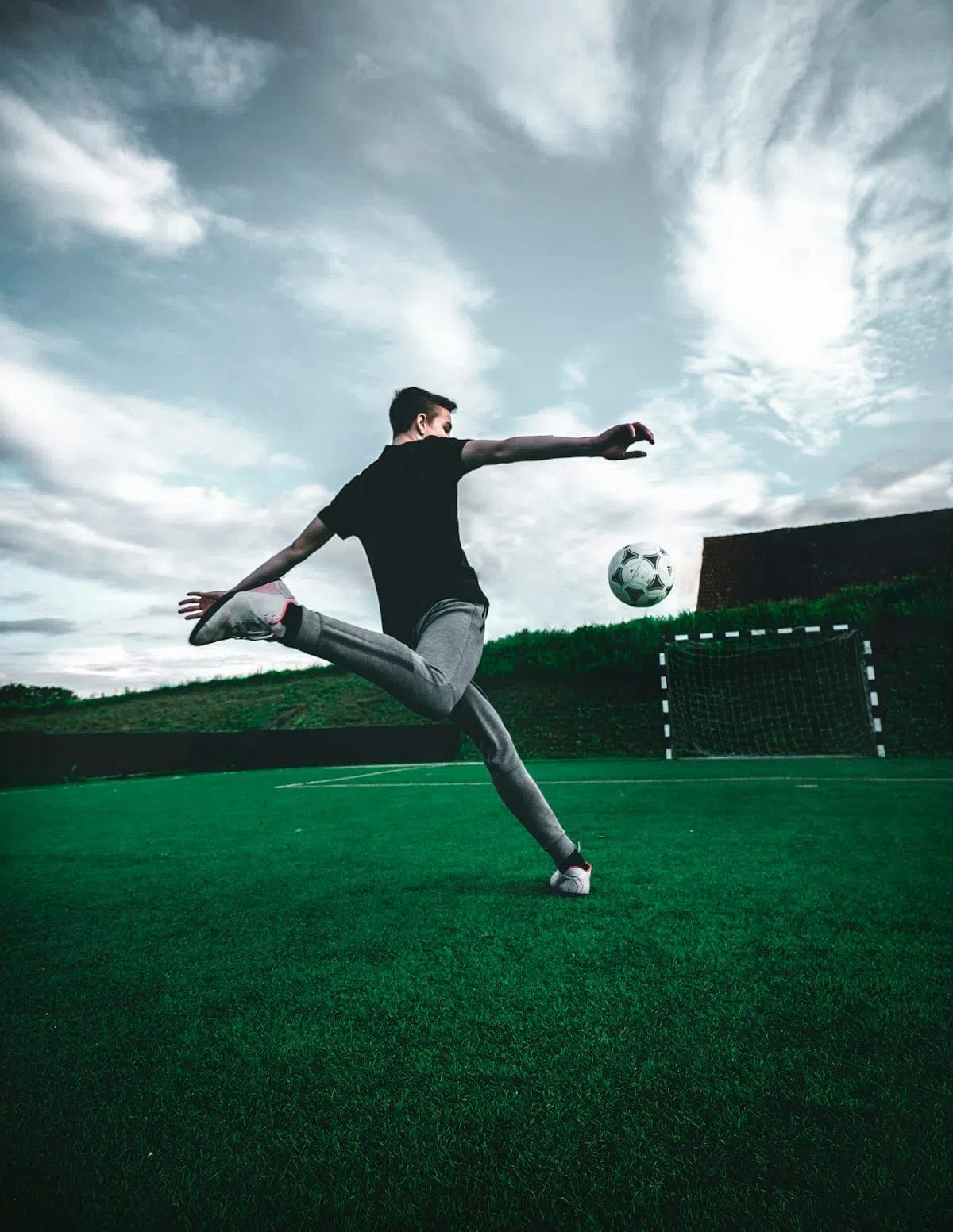
Table of Contents
Key Guide Takeaways
- Plant your non-kicking foot six inches beside the ball pointing at the target.
- Keep your chest and head leaned over the ball to prevent sky-high misses.
- Lock your ankle joint firmly on impact to transfer full striking power.
- Low corner shots have the statistically highest scoring probability in football.
- Land on your striking foot to guarantee complete follow-through momentum.
The Biomechanics of a Clean Strike
Consistent shooting accuracy is an exact biomechanical sequence. Great finishers like Harry Kane, Erling Haaland, and Robert Lewandowski make shooting look effortless because their kinetic chain is repeatable and technically sound:
- Plant Foot Placement: Your non-kicking foot must land approximately 6 inches (15 cm) beside the ball, pointing directly at your target. Landing too far behind tilts your torso backward, sending the ball soaring over the crossbar.
- Chest and Head Over Ball: Keeping your shoulders and chest leaned forward over the ball drives downward trajectory, keeping strikes low and hard.
- Locked Ankle: Point your toes downward and lock your ankle joint rigidly. A loose ankle dissipates striking kinetic energy and produces erratic ball rotation.
- Follow-Through: Land on your kicking foot following contact, driving through the center of the ball.
Placement vs. Power: The Art of the Low Corner
Statistical analysis across elite competitions confirms that low shots aimed into the bottom corners possess the highest conversion rates in football. Because goalkeepers are tallest when standing, dropping to the turf to save a shot takes significantly longer than reaching high.
When within 12 to 16 yards of goal, prioritize side-foot placement (the inside of the boot). Cushion contact rather than swinging with maximum velocity; curling the ball with precision around an outstretched hand produces far more goals than blasted shots down the middle.
The 3 Most Common Amateur Shooting Mistakes
Avoid these three universal mistakes made by developing soccer players:
1. Leaning Backward on Impact: The natural instinct when swinging hard is to fall backward. Focus on driving your knee and chest over the ball at point of contact.
2. Looking at the Goalkeeper Instead of the Ball: Look up early to identify the open net quadrant, then fix your eyes firmly on the contact point of the ball for the final two strides.
3. Decelerating Before the Strike: Do not stutter or slow your momentum; maintain fluid running stride through the follow-through.
Practical Drills to Hone Accuracy
Set up these two simple drills during your practice routines:
Bottom Corner Target Drill: Hang corner targets or place corner flags one yard inside each post. From the edge of the 18-yard box, take 20 shots off a rolling touch, attempting to hit the side netting without touching the center of the goal.
Turn-and-Finish Drill: Receive a pass with your back to goal at the penalty spot. Take one touch across your body around a dummy/defender cone and release your shot on the second touch within 1.5 seconds. Replicating match pressure develops subconscious finishing.
Understand how penalty regulations reward clinical shooting mechanics in our guide to penalty kicks in football.
Frequently Asked Questions
Should I shoot with power or placement inside the box?
Inside the 18-yard box, placement with the inside of the foot into the bottom corners converts at a significantly higher percentage than pure power.
How do I generate more shot power without swinging wildly?
Power comes from leg whip speed and ankle rigidity, not muscular strain. Accelerate your lower leg like a pendulum and lock your ankle through the center of the ball.