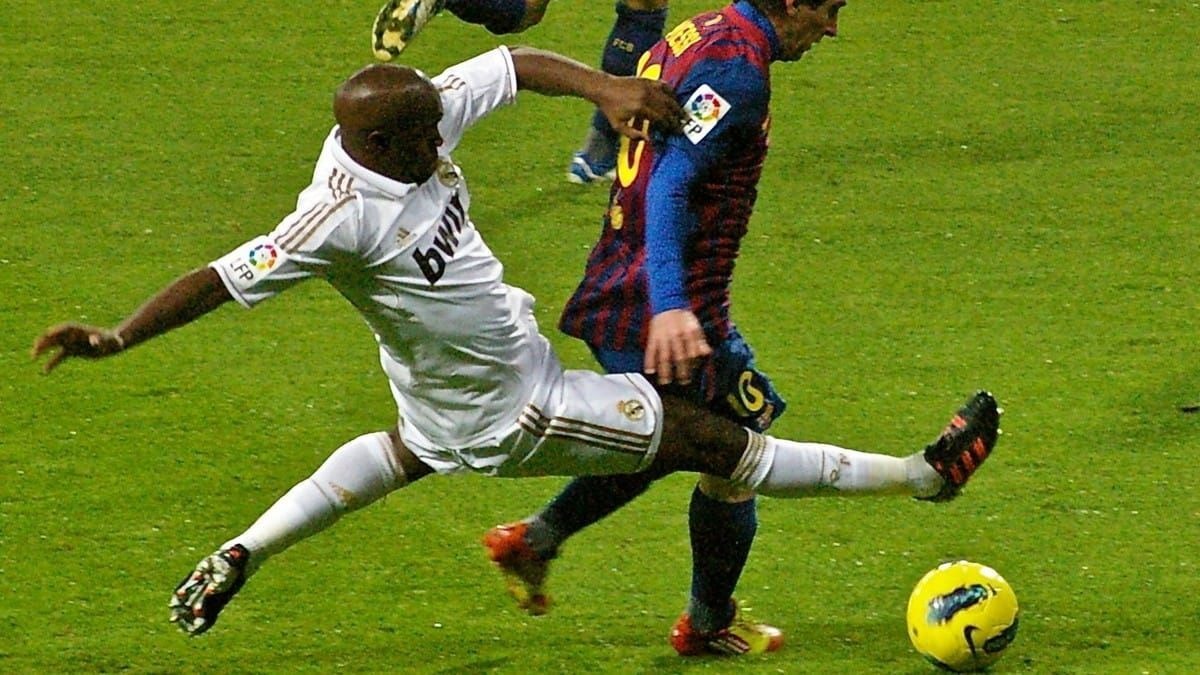
Barcelona delivered a resounding statement of tactical supremacy at the Santiago Bernabéu on October 26, 2024, dismantling Real Madrid 4-0 in an extraordinary El Clásico encounter that highlighted the radical transformation under head coach Hansi Flick. A second-half double from Robert Lewandowski, alongside strikes from Lamine Yamal and Raphinha, sentenced Carlo Ancelotti’s side to their first home La Liga defeat in over 13 months.
The central tactical narrative of the evening was defined by Flick’s audacious defensive high line. Operating with unyielding discipline, Barcelona’s back four of Jules Koundé, Pau Cubarsí, Iñigo Martínez, and Alejandro Balde squeezed the playing field into a 30-yard vertical corridor. This aggressive defensive setup caught Real Madrid offside an astonishing 12 times throughout the 90 minutes. Kylian Mbappé, making his home El Clásico debut, was caught offside on eight separate occasions and saw two second-half goals disallowed by VAR after straying beyond Barcelona’s defensive trap.
During a scoreless first half, Real Madrid repeatedly attempted to exploit the space behind Balde and Koundé using the diagonal pace of Vinícius Júnior and Mbappé. However, Barcelona’s mid-block compact positioning, orchestrated by teenager Marc Casadó and Pedri in central midfield, denied Madrid clean passing lanes into Jude Bellingham. Casadó’s clever positioning screened passes into Luka Modrić and Federico Valverde, preventing Madrid from establishing sustained possession in the central third.
The match swung decisively in Barcelona’s favor in the 54th minute through a moment of razor-sharp transition play. Marc Casadó sliced open Madrid’s central defense with a perfectly weighted through ball from inside his own half. Robert Lewandowski beat Ferland Mendy’s attempt to play offside, stepped into the box, and calmly slotted a low right-footed finish past Andriy Lunin into the bottom corner.
Barely two minutes later, Barcelona struck again to stun the Bernabéu crowd. Left-back Alejandro Balde was afforded time and space on the left flank, delivering a pin-point cross into the heart of the penalty area. Lewandowski rose unmarked between Éder Militão and Antonio Rüdiger to guide a magnificent header into the top corner, registering his 14th La Liga goal of the campaign.
Defensive Solidity & Transition Mechanics: Equally impressive was the counter-pressing discipline demonstrated when possession was turned over. The immediate three-second pressure protocol prevented counter-attacks before they could develop, forcing long clearances and allowing the defensive unit to maintain a high squeeze. Central defenders maintained immaculate line communication, catching attackers in offside traps and winning crucial aerial duels from set-piece deliveries.
Ancelotti responded by introducing Luka Modrić and Brahim Díaz, pushing Real Madrid into an aggressive 4-2-4 formation. However, this left Lucas Vázquez and Éder Militão exposed to rapid counter-attacks. In the 77th minute, Raphinha spearheaded a transition break down the left before laying the ball off to 17-year-old Lamine Yamal. The Spanish sensation unleashed a powerful right-footed shot into the roof of the net, becoming the youngest goalscorer in El Clásico history.
Historical Context & Rivalry Precedents: This fixture adds another memorable chapter to a storied competitive history. Historical head-to-head records demonstrate how subtle tactical evolution continues to redefine these high-profile clashes. With both clubs investing heavily in youth development and cutting-edge analytics, performances of this caliber highlight the peak standard of modern professional football.
Raphinha capped off the historic victory in the 84th minute. Capitalizing on a long defensive pass from Iñigo Martínez that bypassed Madrid’s weary midfield, Raphinha outran Lucas Vázquez before lofting a delicate chip over the advancing Lunin into the net.
Advanced Tactical Analysis & Lineups: Barcelona lined up in a 4-2-3-1 with Peña in goal; Koundé, Cubarsí, Martínez, and Balde across the back four; Casadó and Pedri as a double pivot; Yamal, Fermín, and Raphinha behind Lewandowski. Real Madrid responded in a 4-3-1-2 with Lunin; Vázquez, Militão, Rüdiger, Mendy; Valverde, Tchouaméni, Camavinga; Bellingham; Vinícius and Mbappé up front. The crucial difference lay in Barcelona’s willingness to hold their high line even when Madrid’s passers had open body orientations.
Post-Match Quotes & Reactions: In his post-match press conference, Hansi Flick remarked: "We stuck to our plan 100%. Holding a high defensive line against world-class pace requires total commitment and bravery, and every single player performed their role to perfection." Carlo Ancelotti admitted: "The offside trap worked well for them. We created chances early, but when we went a goal down, we lost our shape and conceded far too much space on the counter-attack."
Statistical Breakdown & Title Race Impact: Flick’s side registered 2.45 expected goals (xG) to Real Madrid’s 1.12 xG, boasting a 58% share of ball possession and completing 89% of their passes in the final third. The 4-0 triumph extended Barcelona’s lead at the top of La Liga to six points, dealing a psychological blow to Real Madrid’s title defense.